


Systems Health Impact System Health Check
From battery, electrical, and thermal management to
Control and security. Set up a system health landscape.
A structured health assessment and risk identification service aimed at large-scale Energy Storage Systems (BES) to create verifiable and traceable health images of assets through on-site testing, operational data, professional measurements and risk classification.
Track and review; verify outcomes in a closed loop
Recommended implementation
Implementation of improvements based on risk priorities
Effect verification
Identification of improvements against key indicators
Review report
Output review record and closure conclusion
Ongoing monitoring
Continuous observation of trends and updating of health portraits
Six health dimensions, building a system health landscape.
The generic assessment structure is based on the key health dimensions of the large energy storage systems, which map the state of equipment, historical trends and risk signals into a unified health picture.
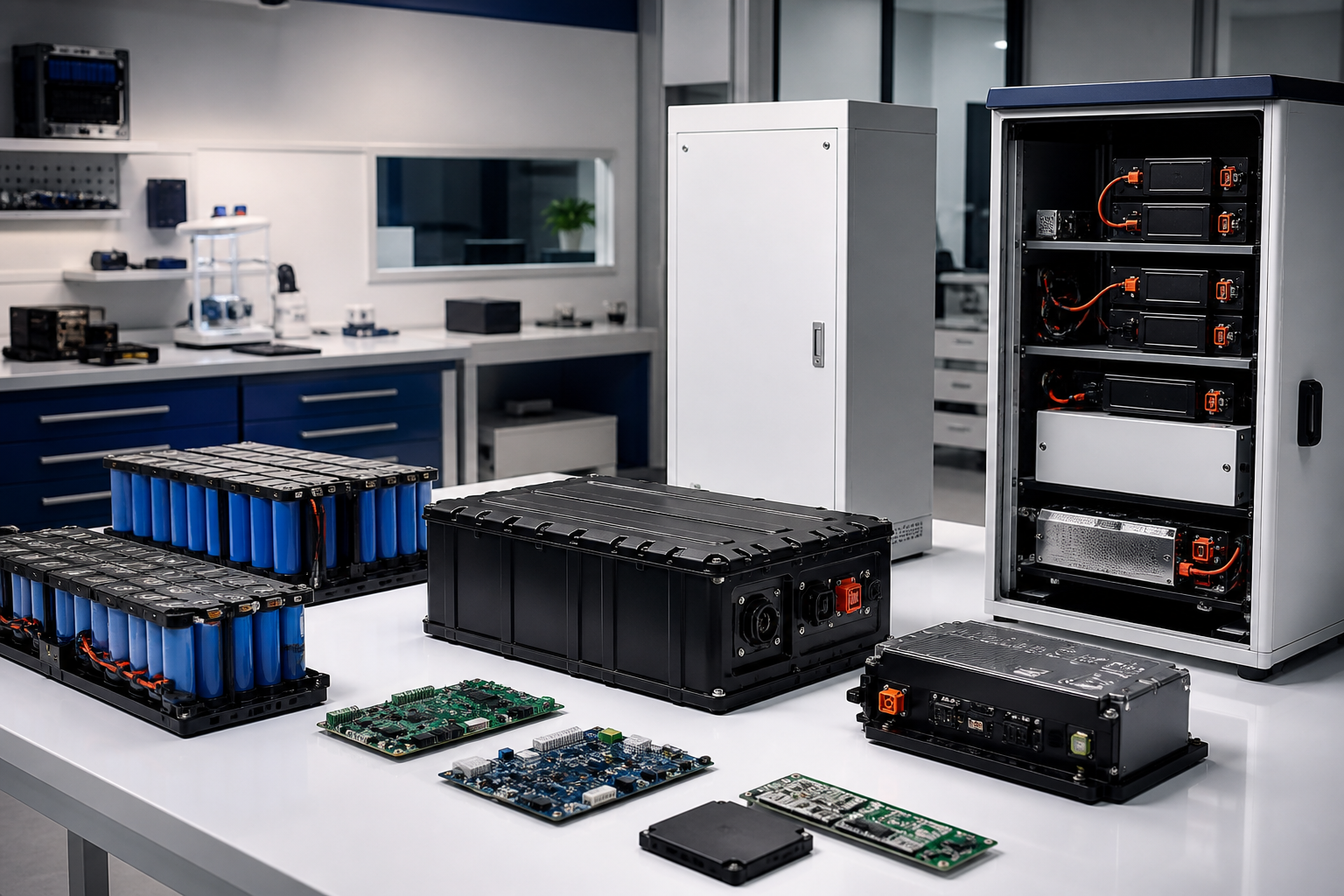
Specialized testing equipment and on-site inspection
Battery inaccessibility tester
Measure core / module internal resistance, judge consistency and ageing trends
Insulation electrical resistance tester
Assessment of the insulation level of the current system
Exposure tester
Check connect points, parent rows, key electrical connections
Electrical Quality Analyser
Electricity, current, harmonization, power factor and frequency analysis
Battery resistance analyser
Identification of cell resistance to change and unusual trends
Environmental monitor
Temperature, wind, noise and site environmental inspection
Key Connection and Inner Status Check
Infrared thermal imaging temperature check.
Insulation and exposure field measurements
Review of equipment status and anomalies
Data-driven analysis to identify trends and root causes
Key-indicator trends (example)
Available capacity
Steady trend
98.6%
98.6%
Direct current exposure.
Trends are rising
0.89 mΩ
+12.6%
Maximum temperature difference
Increase in volatility
8.7°C
+2.1°C
Insulation.
Decline
25 GΩ
-18.3%
Alarm-event distribution (last 90 days)
Total alarms
128
Temperature alert.
42
Communications alarm
31
Insulation alarm
21
Voltage / Flow Alert
19
Other
16
Energy efficiency trends
91.2%
Risk classification and priority
Risk matrix
Low
Medium
High
High impact
Medium
High
Very high.
Medium impact
Low
Medium
High
Low impact
Low
Low
Medium
Main risks currently identified (example)
| Risk item | Observations | Level |
|---|---|---|
| Battery cluster temperature is high. | Part of the Rack peak temperature difference is 8.7°C. | Very high. |
| Direct current contact with electrical resistance rising. | Trend increase in multiple connections | High |
| Partial connection point temperature rise | Infrared tests have detected local temperature increases. | High |
| Wind efficiency is down. | There's a gap between running currents and flows. | Medium |
| Communication chain fluctuations | Occasionally short-term loss of packages and increased delay | Medium |
Recommendations for a road map for action Example:
Time Range
Key actions
Responsible party
Expected impact
Short term0-30 daysRapid governance and risk reduction
- (a) Reviewing and securing abnormal connections;
- Calibrating temperature measurements and heat management parameters;
- Update key warning thresholds and frequency of inspections.
Transport teamPlant manufacturer / System Integration
- Reduce the probability of a connection failure
- Rapidly improve local temperature differentials
Medium term1–3 monthsImprove performance and eliminate hazards
- Replacement of reduced efficiency wind or pumps;
- Optimizing heat management control strategies;
- Conduct a special inspection of critical insulation and connectivity.
Transport team / equipment supplierMake special arrangements, if necessary.
- Increase heat management homogeneity
- Reduction of unplanned alerts
Long term3-12 monthsEnhancing reliability and longevity
- Undertake assessment of battery lifetime and SOH trends;
- Optimizing cooling system capacity and energy consumption;
- Establish a predictive maintenance baseline and periodic Health Check.
Owner / Transport / Equipment Supply BusinessJoint development of annual plans
- Extension of useful life
- Reducing full-life costs
Track and review; verify outcomes in a closed loop
Recommended implementation
Implementation of improvements based on risk priorities
Effect verification
Identification of improvements against key indicators
Review report
Output review record and closure conclusion
Ongoing monitoring
Continuous observation of trends and updating of health portraits
Better, safer, more efficient for every set of Energy Storage Systems.
TIANCHU provides protection for your assets, helping to establish a sustainable and verifiable health closed system through structured Health Check, risk analysis and action road map.