
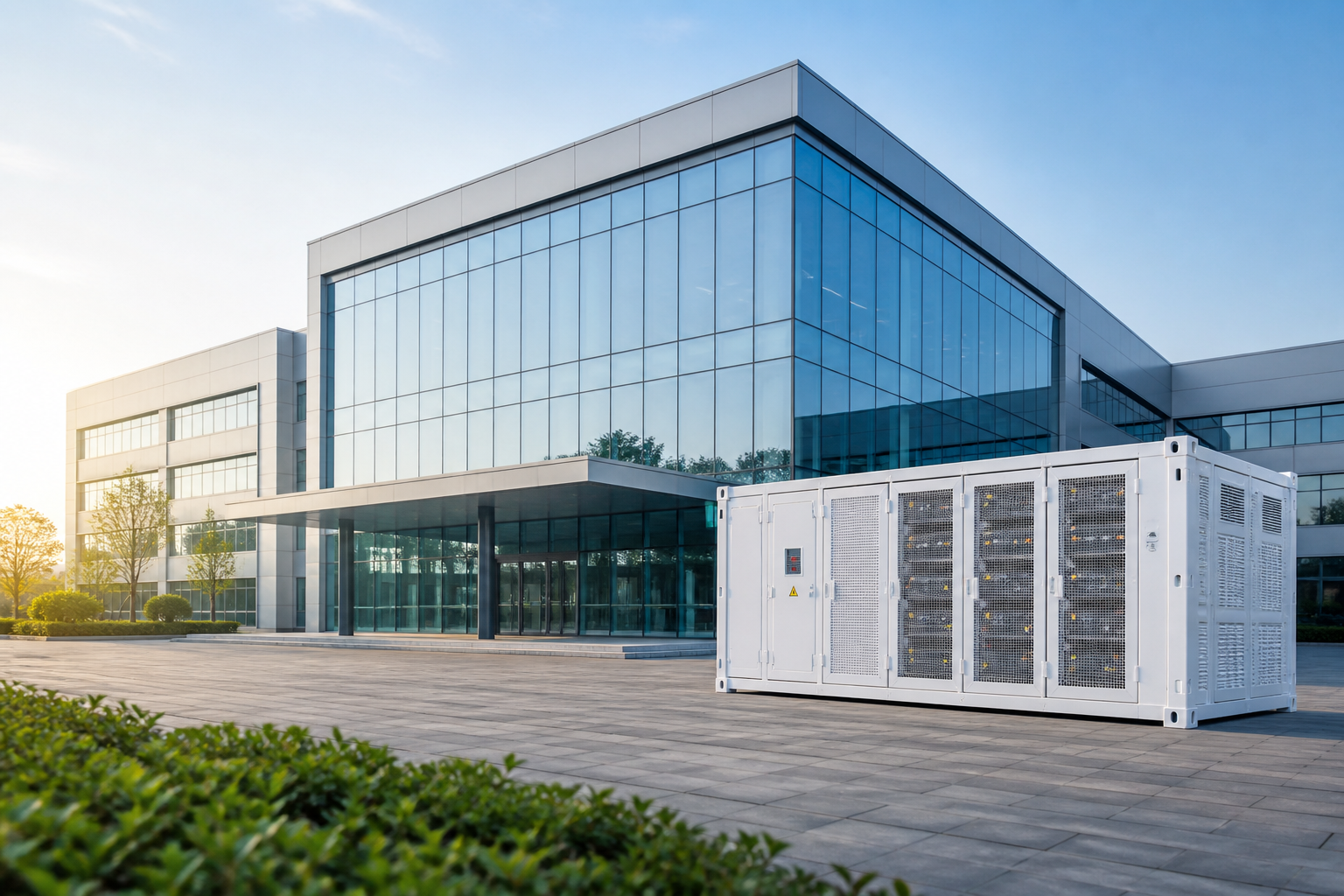
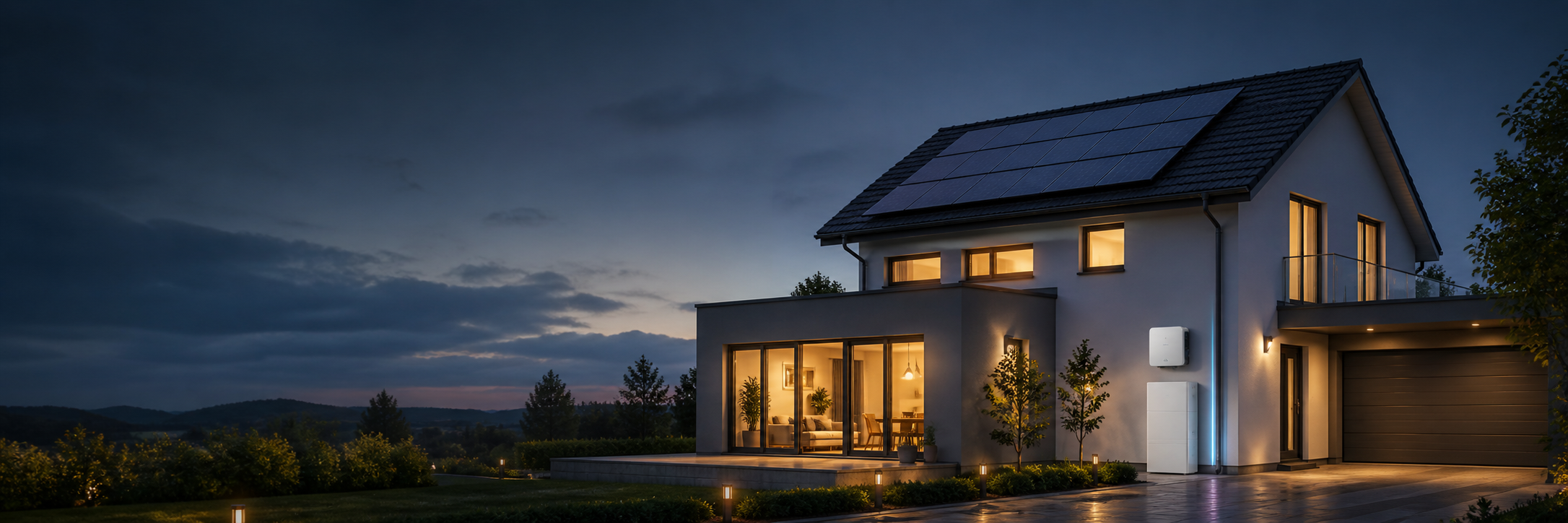
Integrated lithium battery energy storage solutions
Map of the household ' s electricity supply and mixed energy reserves

Home Backup & Hybrid Storage

From power grid break to family recovery, there's a control logic for every move.

The establishment of a phased back-up process from power outage identification, off-grid switching, black start-up to grid restoration, subject to key load priority, energy storage, photovoltaic availability and grid-connected conditions, will allow household electricity to be provided not just as a “battery”, but as a verifiable energy system.

Key Load Priority Safety of life, communications and family core equipment.
millisecond control logic Power outages are identified, isolated, and can be taken over logically.
Backup power management Dynamic retention SOC, safe capacity and recovery residual.
The power is restored in an orderly manner. Reconstruction of the electricity grid and gradual and phased recovery of loads.

System Topology Line Chart

Grid Connection Status Utility Grid
meter / metering Revenue Meter
Isolation. Isolation Switch
Mixed Reverser / PCS PV + Battery
ATS / Ready to switch Hybrid ATS
Main distribution panel Main Panel

Power outage event recorder A complete interruption and recovery process

1 The grid is working. 05-18 18:22:10
2 The voltage is abnormal. 18:22:10.012
3 Power grid isolation 18:22:10.026
4 Take over. 18:22:10.045
5 Dynamic limit 18:22:15.110
6 Photovoltal recovery 18:24:00.530
7 The grid is good. 18:26:31.880
8 Synchronize 18:26:32.210
Trigger condition Test Action Power grid isolation Insular power supply Dynamic limit Photovoltal recovery Synchronization gate
Pressure / Frequency Abnormal Confirm the limit. Open mesh switch PCS Create AC Master Switch by load priority Input after condition is met Pressure / Frequency / Phase Check

It's not a battery, it's a power priority.

Load Priority Project Sheet Presentation

Device / Load Activate Power Continuous Power Priority SOC 100% SOC 60% SOC 40% SOC 20%
Refrigerator 0.6 kW 0.15 kW A1 5.5h 4.4h 3.3h 1.1h
Lighting 0.1 kW 0.10 kW A1 27.5h 22h 16.5h 5.5h
Network / Router 0.1 kW 0.05 kW A1 110h 88h 66h 22h
Kitchen basic equipment 0.8 kW 0.40 kW A1 13.8h 11h 8.3h 2.8h
Water pumps 1.5 kW 0.60 kW A2 9.2h 7.4h 5.5h 1.8h
Air conditioning 5.2 kW 1.20 kW B1 4.6h 3.7h 2.8h 0.9h
EV Charge 7.0 kW 7.00 kW C 1.2h 0.9h 0.7h 0.2h

Electricity supply during daytime vs. blackouts at night

Daytime Optical voltage Available

Power flow (kW)
Photovolt+5.6
Batteries-2.1
Load-3.5

SOC Change Curve

Night Photovolt is not available

Power flow (kW)
Photovolt0.0
Batteries-5.4
Load-5.4

SOC Change Curve

System backup bottom line: SOC policy 20% ≥ (setable 10-30%)

Co-programming of energy mix Modes and Interlocks

Site Source

Optical Array
Energy Storage Systems
Grid Connection Status
Optional Generators

Run Mode (Auto Switch)

Networking Mode Prioritize spontaneous self-use and maintain backup SOC
Electricity mode Key load priority, dynamic load limit
Peak Mode Control photovoltaic and storage power when no grid

Black Start and Order Recovery Scheduling

1 Power grid's out. 0 ms
2 DC mainline maintained 10–60ms
3 PCS Start 50–120ms
4 Create an AC bus 120–200ms
5 Critical load up. 200–500ms
6 Restart Time 0.5–60s
7 Electron grid-qualified windows >60s
8 Synchronization >60s
9 Full Restore Completed

Decline / Fault Logic Security priority

Fault Trigger condition System Actions Restore Logic
Low battery SOC SOC ≤ 20% Cut unless critical load SOC Post Recovery Phased Input
PCS not available PCS failure / excessive temperature Trip output and raise alarm Restart after failure clearance
Communications anomaly Data Interrupt Enter local conservative mode Synchronize after communication is restored
Overload Power exceeding limit Cache load by priority Delay recovery after load drop
Photovoltal anomaly PV Not Available Conversion to pure battery energy Reconnect after stabilization.

Delivery result: the grid comes back, not all of it immediately.

1 Check the grid. Voltage / Frequency Stable Sustained Fulfilment
2 Phase / Frequency Sync Confirm Synchronization Window and Phase Bad
3 Synchronization ATS / PCS Execute Smooth Switch
4 Partition Load Restore Zone A → Zone B → Zone C
5 Recovery plan strategy Restore recharge target and normal SOC policy

Project installation and debugging process

• Site survey Power distribution, load, installation confirmation
2. Electrical distribution system design ATS, PCS, batteries, switchboard design
3 Container and equipment installation Batteries, PCS, containment cabinets in position.
4. Equipment connection AC / DC / Communication / ATS connection
5 Power outage simulation Simulate interruption and validate off-grid takeover
6. Restoration of testing Verify synchronizing grid and load restoration
7 User Training Run, report and maintain Training

Validation of records and delivery documents

Item Standard / target Actual value Result
Switch Time < 200ms 184ms PASS
Offline RMS 230V ±5% 228.8V PASS
Output Frequency 50 ±0.2Hz 50.00Hz PASS
Critical load recovery 100% 100% PASS
Sync Time <180s 110s PASS

NEXT STEP

Combine boundary and delivery path around Home Backup & Hybrid Storage

Programme configuration and implementation tempo can be further confirmed on the basis of on-site loads, netting conditions, installed space and transportation requirements.